Hyperbaric oxygen therapy · HBOT
Oxygen under pressure, deep into the tissue
With HBOT you breathe 100% oxygen through a mask, in a chamber in which the pressure is higher than normal. As a result, much more oxygen dissolves in the blood and it also reaches places where blood flow is poorer.
Book a free intake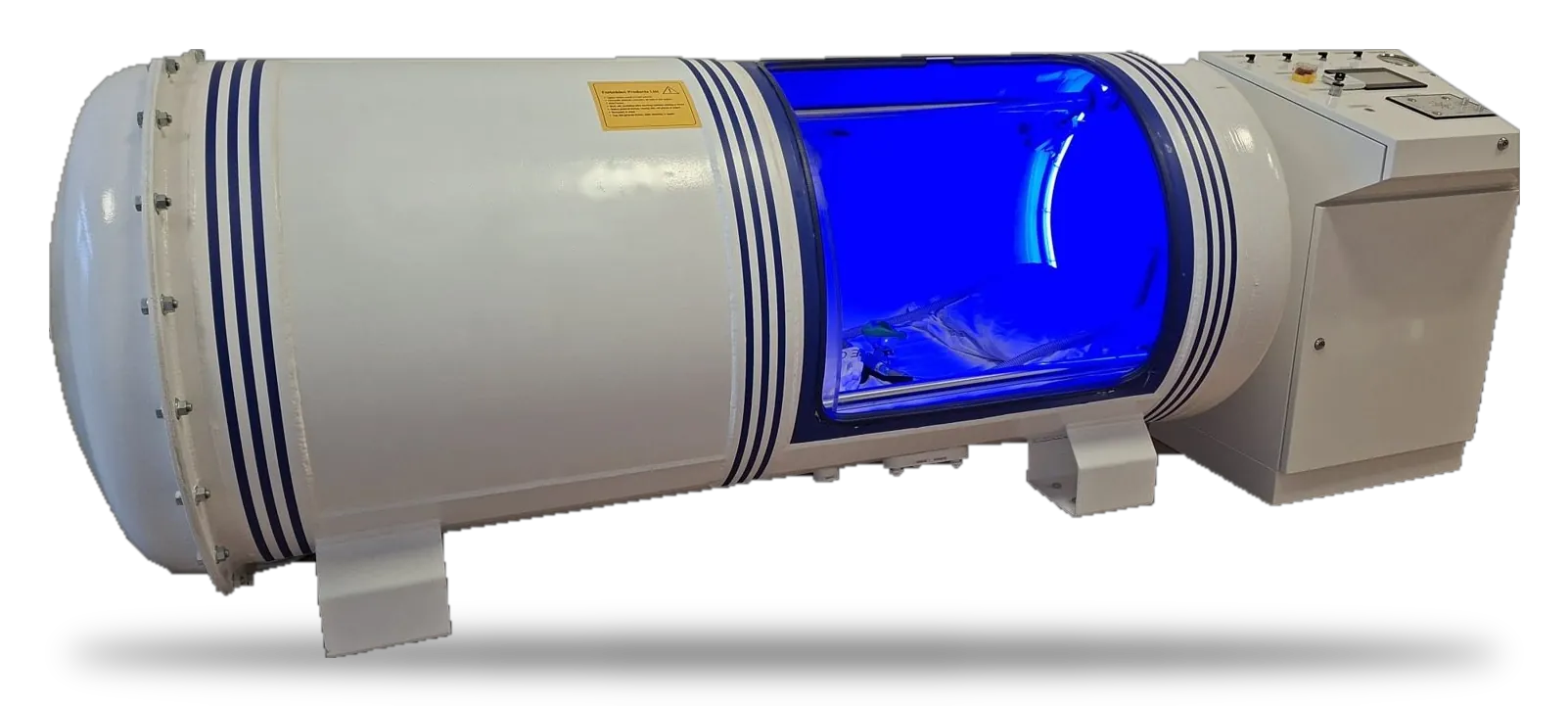
100%
oxygen through a mask
Up to 2.5 ATA
medical single-person chambers
60 · 90 · 120
minutes per session
Always
an operator in the room
How it works
What does hyperbaric oxygen do in the body?
Normally, red blood cells carry oxygen. Under increased pressure, oxygen also dissolves in the blood plasma, according to Henry's law. The temporarily higher oxygen tension sets several processes in motion.
01
More dissolved oxygen
Under increased pressure, considerably more oxygen dissolves in the blood plasma, greatly increasing the supply to tissues.
02
Blood flow and oedema
A high oxygen tension causes blood vessels to narrow while plenty of oxygen remains available. This reduces swelling and supports the microcirculation.
03
New blood vessels
HBOT stimulates processes involved in the formation and development of blood vessels (angiogenesis).
04
Collagen and tissue repair
Oxygen is essential for fibroblasts and collagen formation, which are important for wound healing and tissue renewal.
05
Immunity and inflammation
Hyperbaric oxygen influences the activity of white blood cells and other immune processes, and inhibits certain anaerobic bacteria.
06
Mitochondria and energy
Mitochondria use oxygen to make ATP. Research with HBOT shows improved mitochondrial respiration.
HBOT is medically recognised for a limited number of indications. For other applications it is being studied, and we offer it as complementary support. The scientific evidence differs per application.
A session, step by step
Comparable to a calm dive
-
1
Preparation
You put on the cotton clothing we provide. Jewellery and electronics stay outside; a book is fine. The operator fits your mask and explains how to equalise your ears.
-
2
Descent
The chamber is slowly pressurised, just like a dive of a few metres. You equalise your ears regularly. It becomes slightly warmer.
-
3
At depth
You put on the mask and breathe 100% oxygen, lying down and relaxed. You can read, sleep or meditate. You are always in contact through the intercom.
-
4
Ascent
The pressure calmly returns to normal. You equalise your ears again and it becomes a little cooler. Then you change back into your own clothes.
How do you feel afterwards?
That differs from person to person. Most clients feel fit and energetic; others are a little tired after the session.
Safety
Safe, with proper supervision
Every client starts with an intake and a check for contraindications. Our trained operators work according to the standards of ANDI International and are in the same room throughout the session.
More pressure or a longer session is not automatically better. We tailor pressure, duration and air breaks to your situation.
Pressure on the ears
The most common side effect, similar to flying. Let us know through the intercom; the operator adjusts the pressure immediately. A nasal spray beforehand can help.
Claustrophobia
The chamber is spacious, with a large window and an intercom. Let us know in advance and we will help you with relaxation techniques.
Oxygen toxicity
Very rare at the pressures and durations used. Any seizure stops as soon as the oxygen is stopped. We screen for this in advance.
Eyes
An existing cataract may mature faster. HBOT itself does not cause cataracts.
Contraindications
Can I undergo HBOT?
Do any of the points below apply to you? Then you first need a medical consultation with a doctor to obtain approval. We always discuss this during the intake.
Absolute
- Untreated collapsed lung (pneumothorax)
- Fever
- Certain medication used in cancer treatment (we check this at registration)
Relative
Difficulty equalising or previous barotrauma of the ear or lung · past lung or ear surgery · COPD, asthma or other lung conditions · previous spontaneous collapsed lung · heart problems, angina pectoris or uncontrolled high blood pressure · implants such as a pacemaker · epilepsy · insulin use · anaemia or uncontrolled bleeding · cancer · PFO · untreated thyroid condition · viral infection or severe hay fever · dental problems · eye conditions or previous optic neuritis · decompression sickness · severe claustrophobia · pregnancy · drug or alcohol use
Background
More about hyperbaric oxygen therapy
Recognised medical applications
In hospitals, hyperbaric oxygen is used for conditions including decompression sickness, carbon monoxide poisoning, hard-to-heal wounds such as a diabetic foot, and late damage after radiotherapy. Research is also ongoing into, for example, long COVID, brain injury, sports recovery and healthy ageing.
A brief history
As early as the 17th century, doctors experimented with pressurised air. In the 20th century, hyperbaric oxygen became a standard treatment in diving medicine and later in wound care. Modern chambers now make HBOT safely and comfortably accessible outside the hospital as well.
Hyperbaric oxygen in the Netherlands
Medical HBOT takes place in a number of specialised centres, usually after referral. At The Oxygen Wellness Lab in Waalre you can come without a referral for complementary HBOT sessions, in single-person chambers up to 2.5 ATA.
Reimbursement by health insurers
Our sessions are not a medical treatment and are not reimbursed under Dutch basic health insurance. Some supplementary policies reimburse part of complementary care; check with your insurer.
More treatments
Is HBOT right for your situation?
In a free intake consultation we discuss your goal, your health and any contraindications.